Dual Tesla Wall Connector Install with Smart Power Sharing
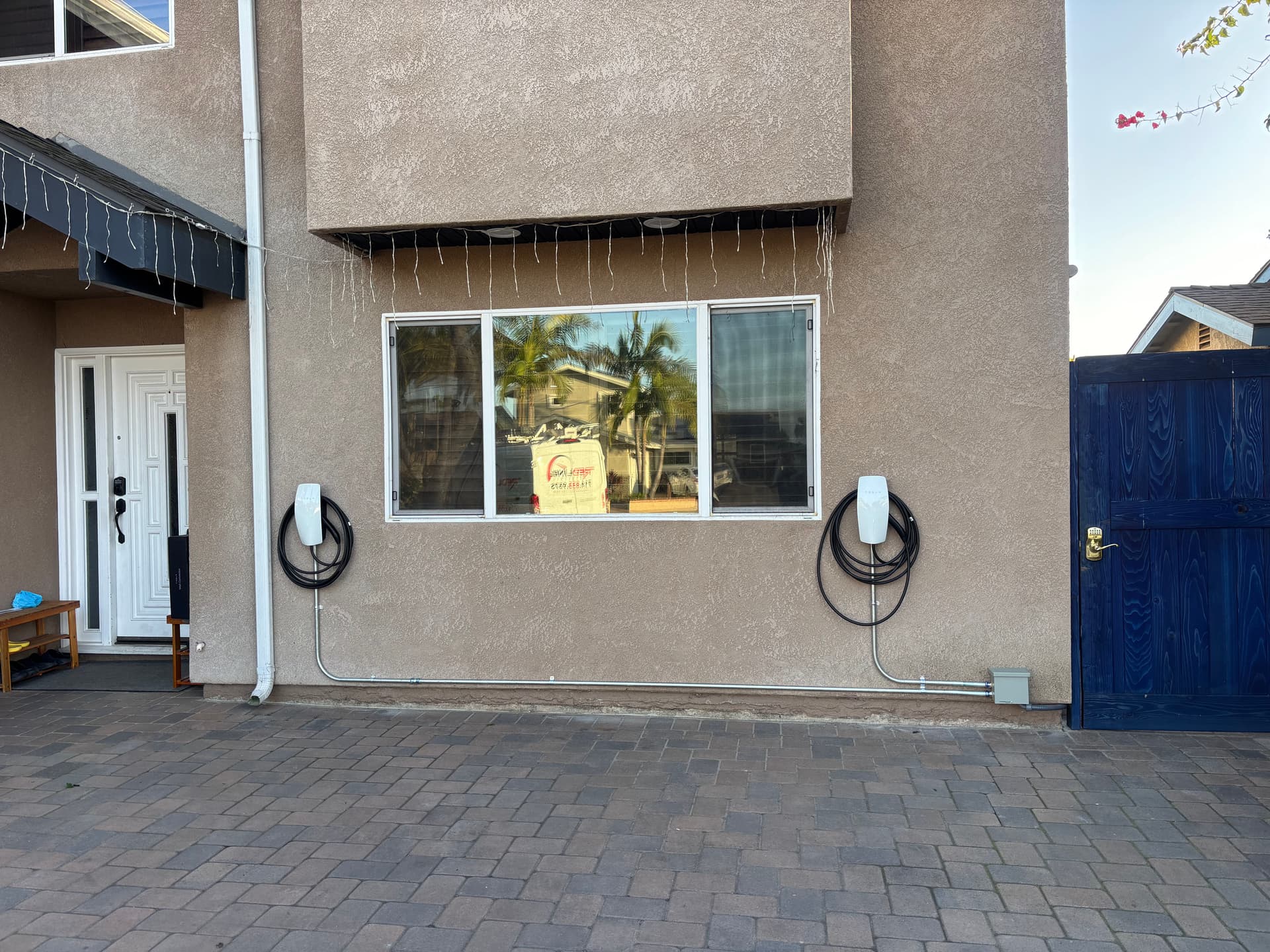
Two EVs, one household, zero headaches. That's what this setup is all about. A lot of homeowners with multiple electric vehicles run into the same problem - one charger just doesn't cut it, but they're worried about what two chargers will do to their electrical panel. That's a fair concern, and it's exactly why the power sharing feature on Tesla Wall Connectors is such a smart solution.
Here's how it works. When you install two Wall Connectors and enable Group Power Management, the units communicate with each other and automatically split the available load between them. So instead of drawing full power on both units simultaneously, they share it intelligently based on what's actually needed. The panel stays happy, and both vehicles still charge overnight without any issues.
The conduit runs clean and tight along the exterior wall, and both units are mounted at a consistent height on either side of the window. It's a symmetrical, intentional layout - not an afterthought. The wiring is done right, which matters more than people realize. A sloppy EV charger install can cause tripped breakers, undervoltage faults, or worse over time.
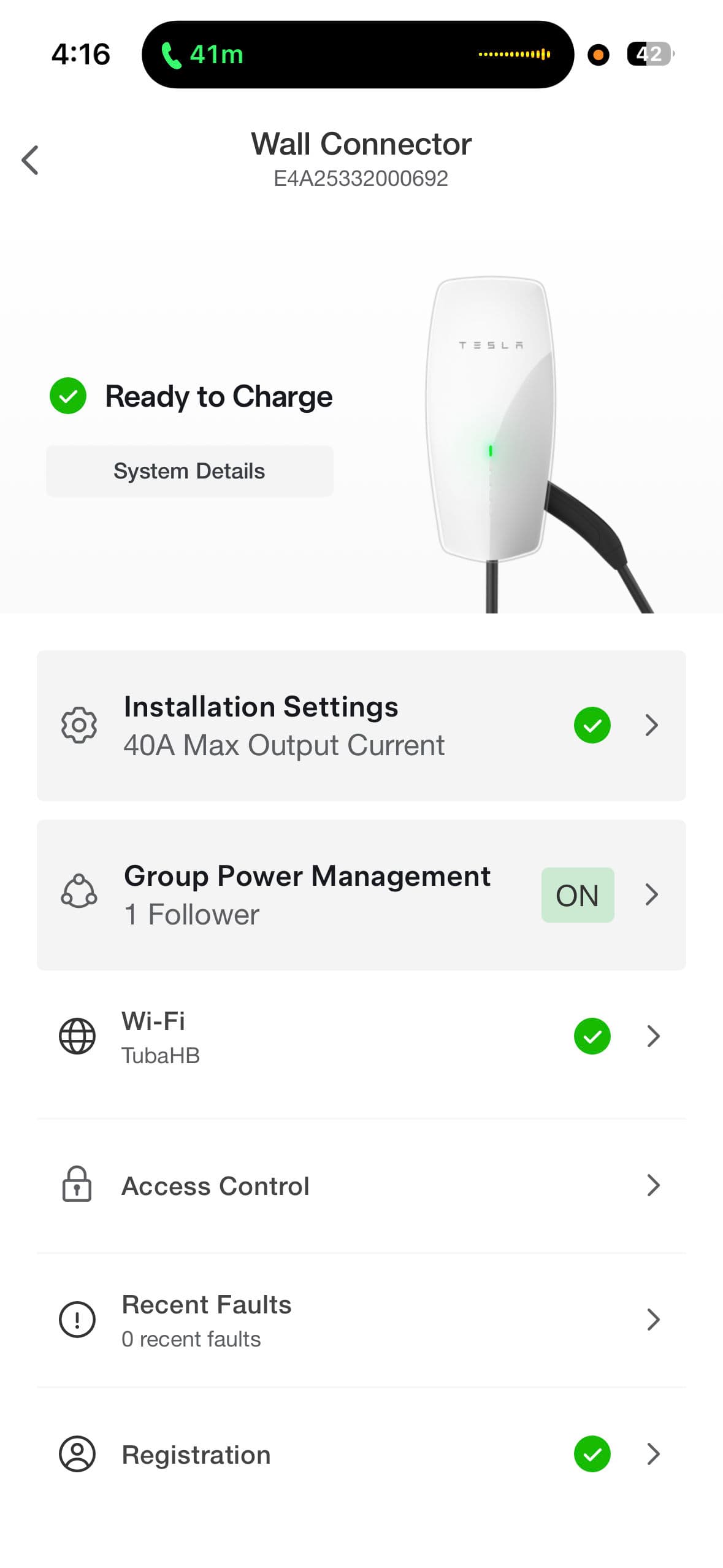
On the app side, the unit is confirmed at 40A max output with Group Power Management switched on and one follower connected - meaning both chargers are talking to each other exactly as intended. Zero recent faults. Fully registered. Ready to charge. That's what a finished job looks like.
This is the kind of electrical wiring work that actually adds value to a home. As more households go multi-EV, setups like this are going to become the standard rather than the exception. Getting it done properly from the start means you're not calling someone back out six months later to fix a problem.