200-Amp Service Upgrade with New Sub Panel and EV Outlet
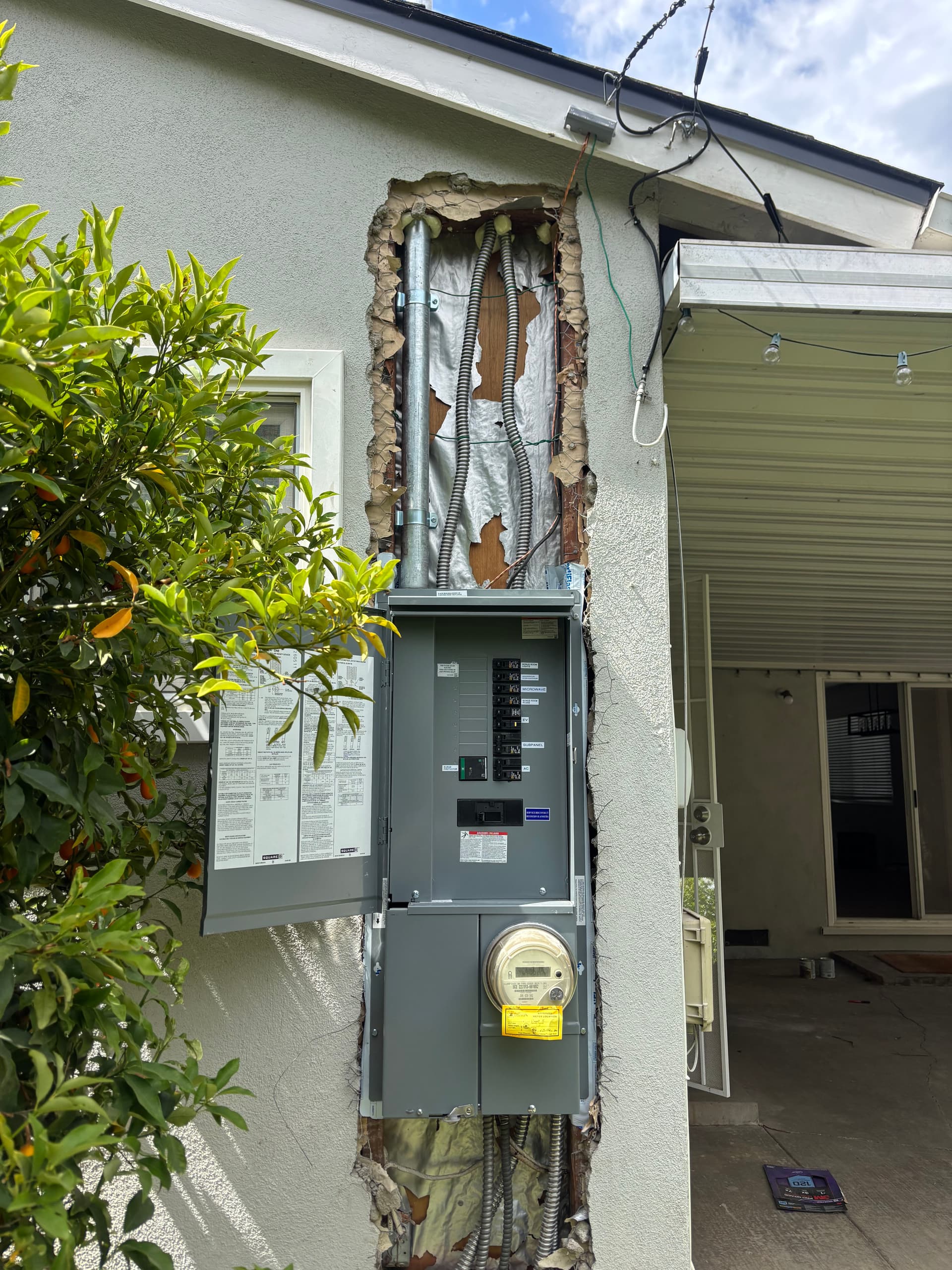
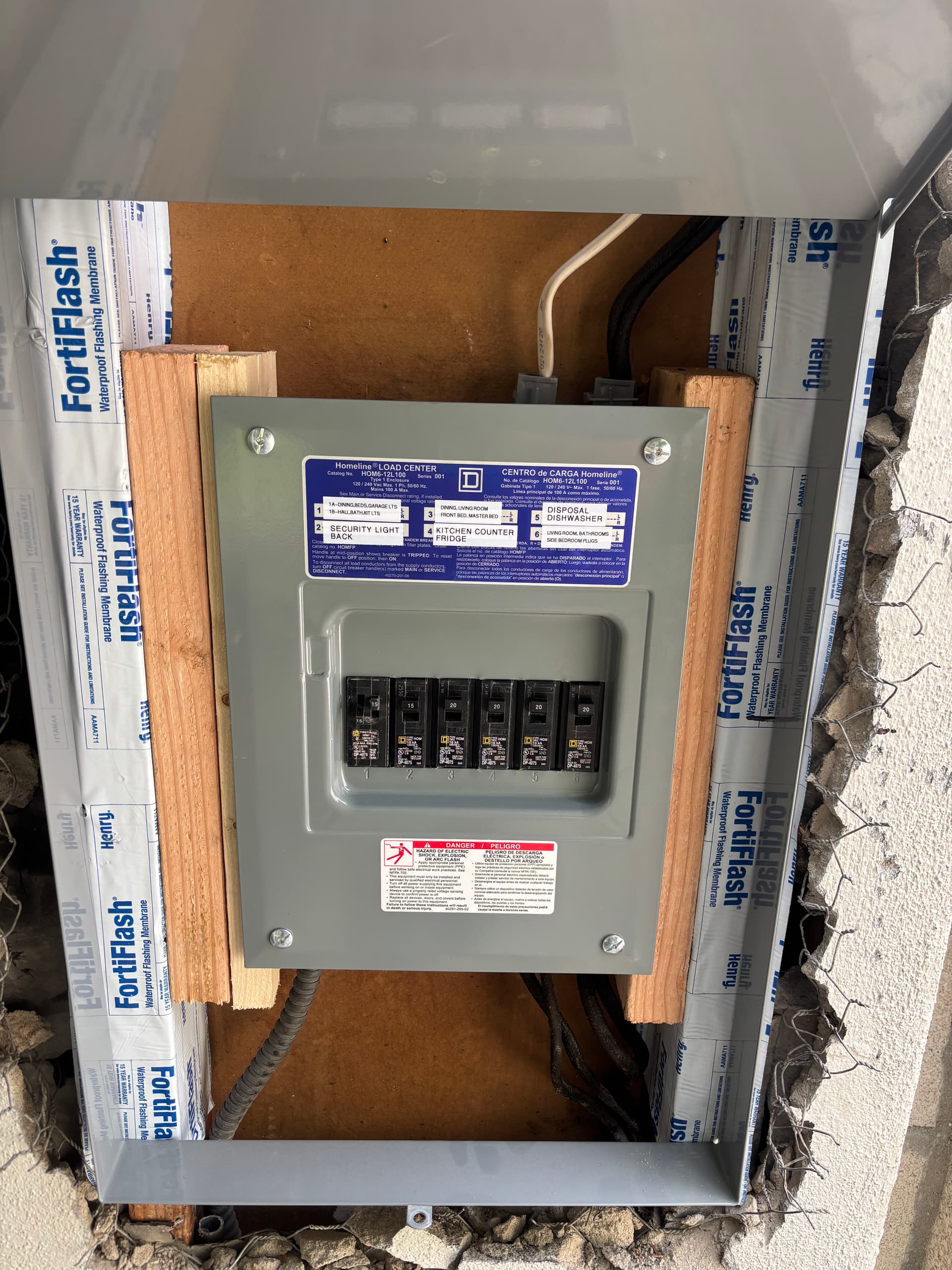
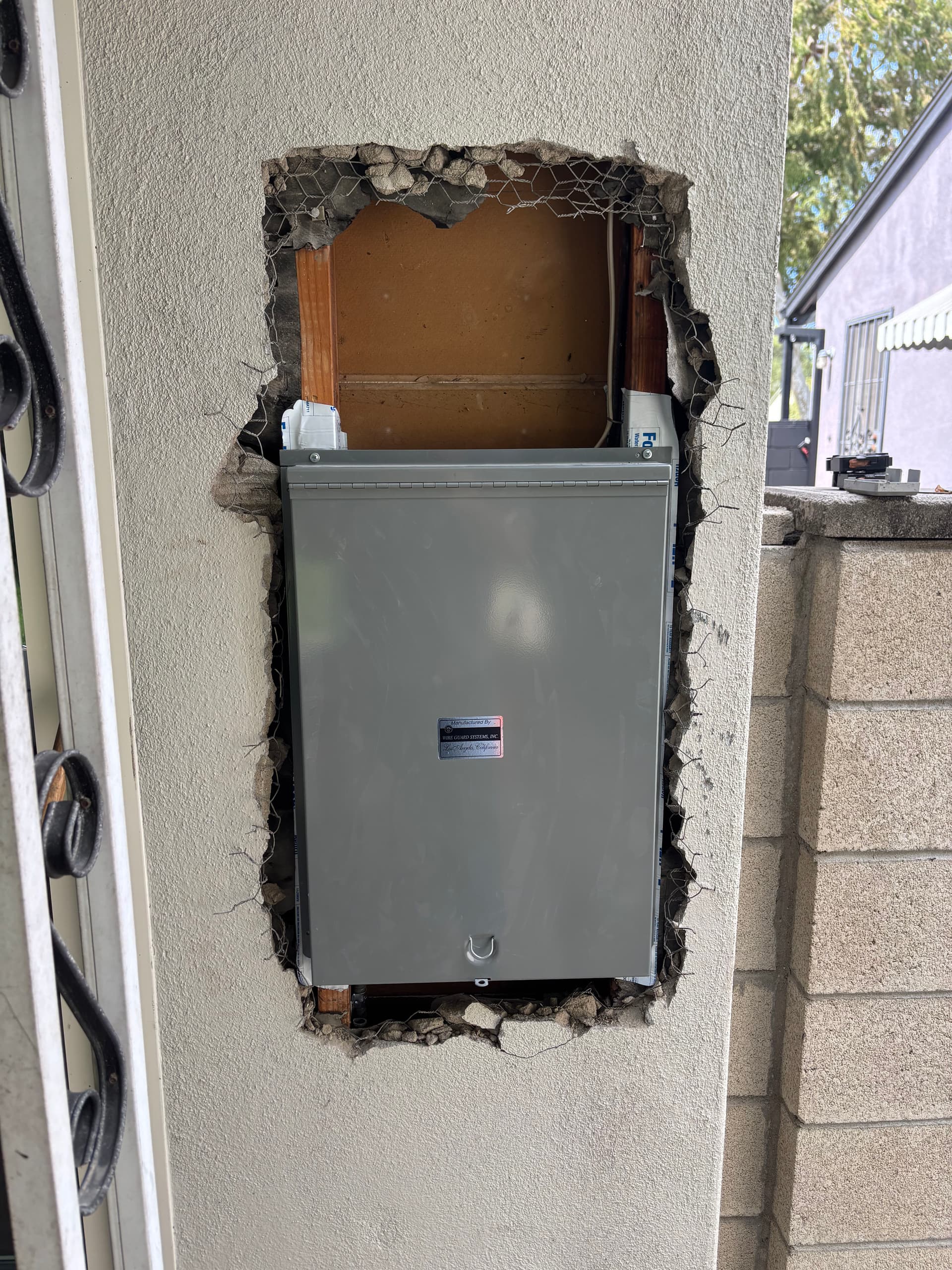
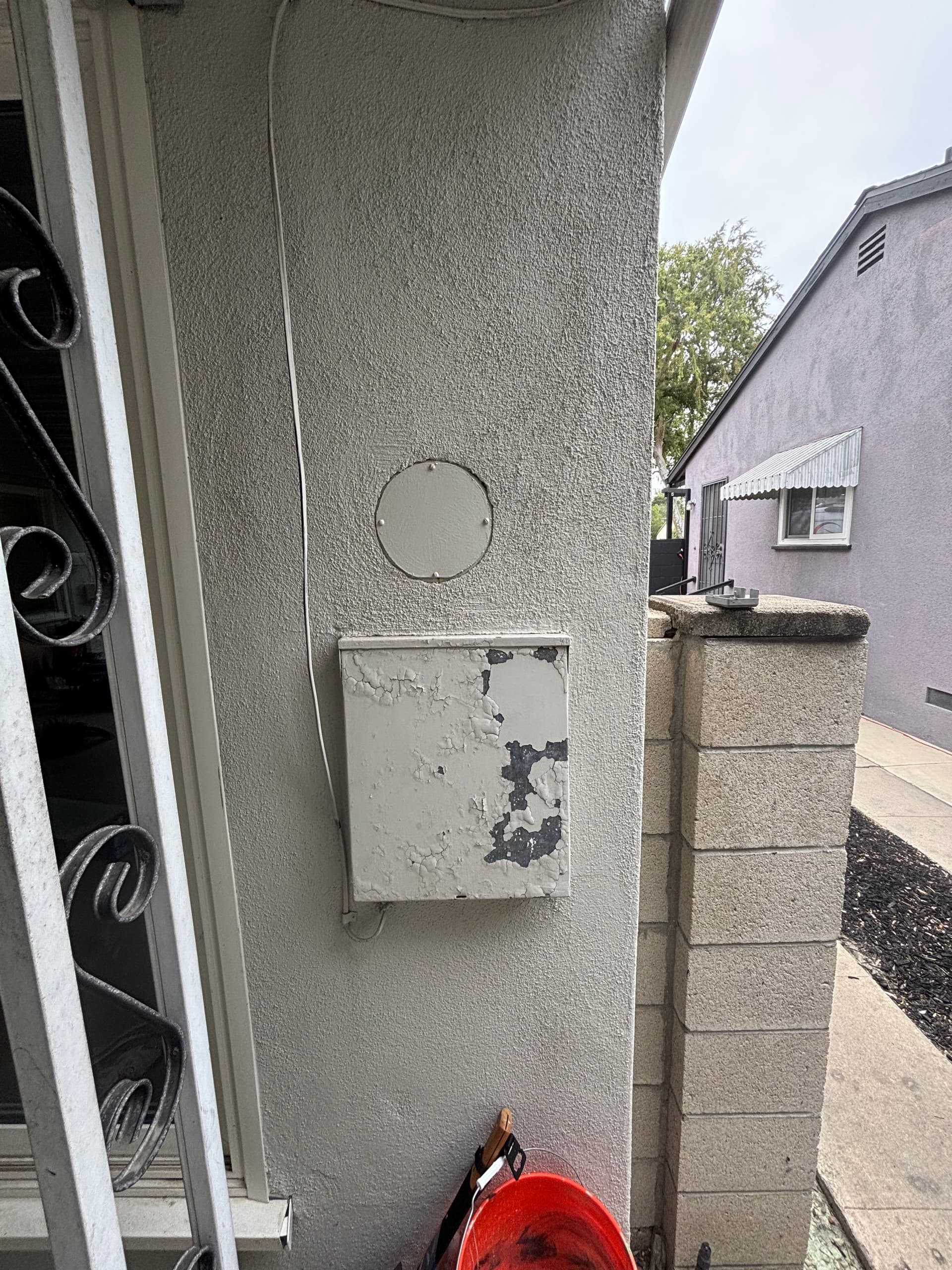
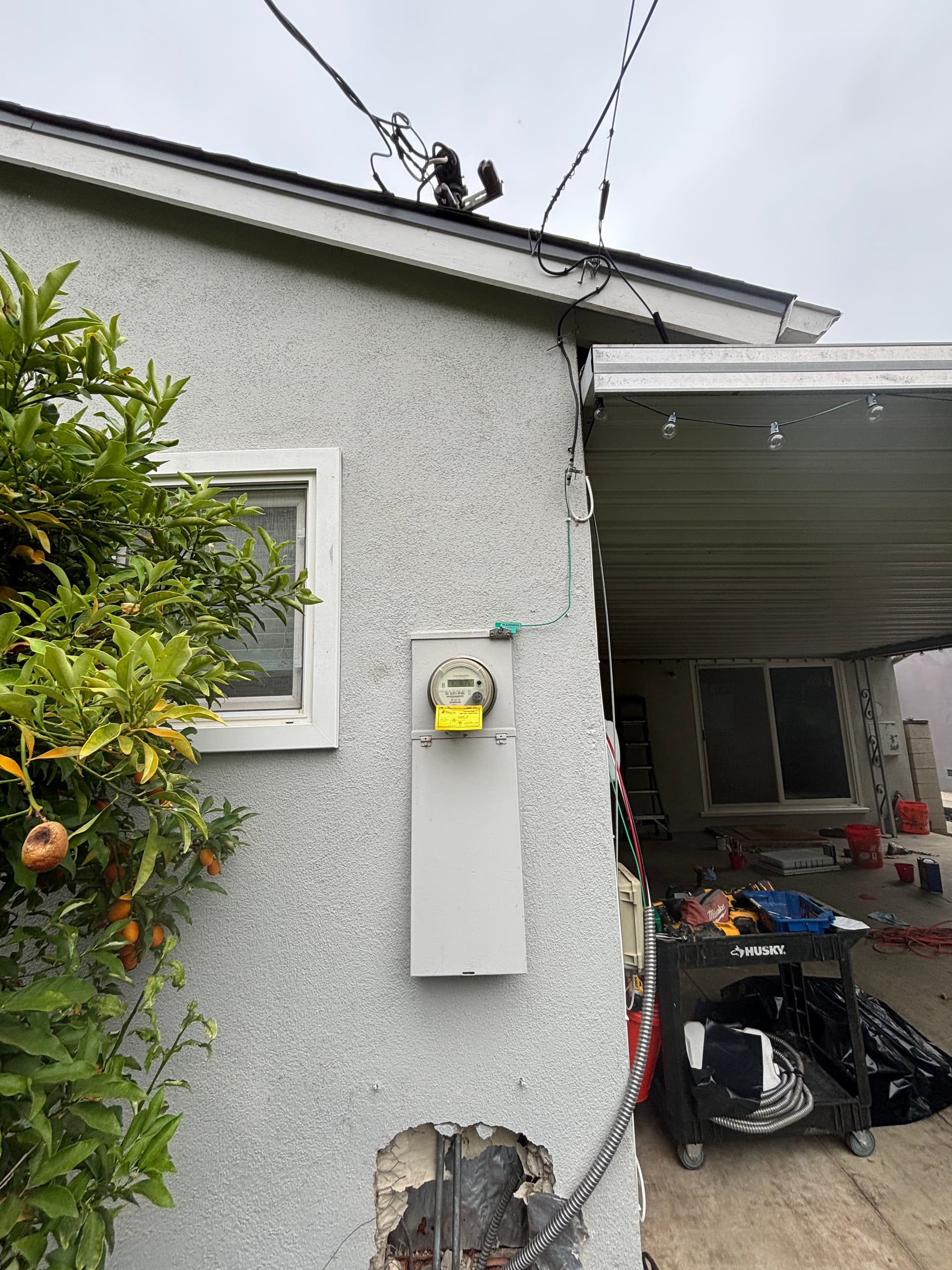
Here's what an outdated electrical setup looks like when it's finally had enough. This home was running on an old, undersized service that couldn't keep up with modern demand - and the sub panel was in rough shape too. Paint peeling off the enclosure, inadequate capacity, no room to grow. It needed a full overhaul.
We upgraded the home to a 200-amp service, which is the standard for most modern households and a must-have if you're running high-draw appliances, a home office setup, or anything power-intensive. Going from a limited service to 200 amps isn't just about adding capacity - it's about giving your home a foundation that can actually handle what you throw at it.
The old sub panel got pulled and replaced with a new Square D Homeline load center, properly framed in and sealed with waterproof flashing membrane around the opening. That detail matters. An exterior panel that isn't properly weather-sealed is an invitation for moisture damage, corrosion, and eventually a failed panel. We did it right so it lasts.
We also added an EV-ready outlet as part of this job. If you drive an electric vehicle - or plan to - having a dedicated outlet at home is the move. No more relying on public chargers or slow Level 1 charging through a standard outlet. This homeowner now has a setup that's ready to charge overnight without a second thought.
Jobs like this are exactly what a full electrical panel upgrade and replacement should look like. New gear, properly installed, weatherproofed, and built to handle the next 20-plus years of how people actually use their homes.